

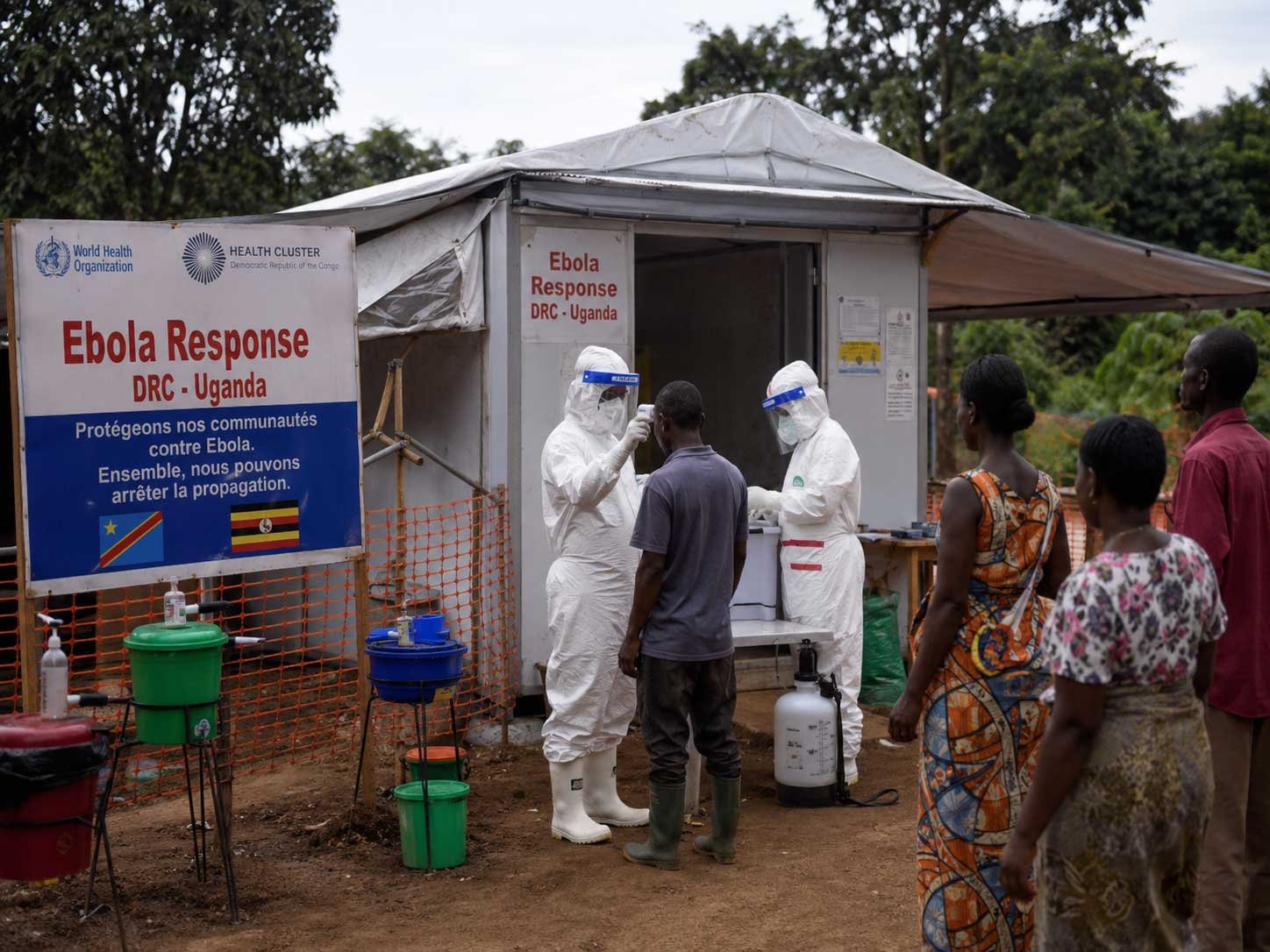
The Ebola outbreak currently affecting the Democratic Republic of Congo and Uganda has become a serious regional public health emergency, with international agencies warning that the situation is still evolving and may be larger than official figures currently show. The outbreak is caused by the Bundibugyo virus, a rare species of Ebola virus for which there is currently no licensed vaccine or specific approved treatment.
On 16 May 2026, the Director-General of the World Health Organization determined that the Ebola disease outbreak caused by Bundibugyo virus in the Democratic Republic of Congo and Uganda constitutes a Public Health Emergency of International Concern, known as a PHEIC. WHO clarified that the event does not currently meet the criteria of a pandemic emergency.
Latest situation
The outbreak was first detected in Ituri Province, in northeastern Democratic Republic of Congo, after WHO was alerted on 5 May 2026 to a high-mortality cluster of illness in Mongbwalu Health Zone. The situation was especially concerning because deaths were also reported among health workers, raising fears of healthcare-associated transmission and possible gaps in infection prevention and control.
Laboratory testing later confirmed Bundibugyo virus disease. On 15 May 2026, DRC authorities officially declared the country’s 17th Ebola disease outbreak. The initial confirmed areas included Rwampara, Mongbwalu, and Bunia health zones in Ituri Province, while suspected cases were also being investigated in other parts of Ituri and North Kivu.
As of 21 May 2026, CDC reported that health authorities in DRC and Uganda had recorded 575 suspected cases, 51 confirmed cases, and 148 suspected deaths. These numbers include two confirmed imported cases in Uganda, including one death, in people who had traveled from DRC. CDC also noted that no further spread had been reported in Uganda at that stage.
Because this is a fast-moving outbreak, the numbers should be treated as provisional. ECDC warned that, given the recent declaration of the outbreak and uncertainty around the epidemiological picture, the true number of cases and the geographical spread may be larger than currently reported.
Why this outbreak is concerning
Ebola outbreaks are not unusual in DRC, which has dealt with multiple episodes since the virus was first identified in 1976. What makes this outbreak particularly concerning is the combination of the virus strain, the affected geography, cross-border movement, insecurity, and the limited availability of strain-specific medical countermeasures.
The virus involved is Bundibugyo virus, one of the Ebola virus species capable of causing severe disease in humans. WHO states that previous Bundibugyo virus disease outbreaks have had case fatality rates ranging from about 30% to 50%. Unlike Ebola Zaire, for which vaccines and specific treatments exist, there is currently no licensed vaccine or specific therapeutic treatment for Bundibugyo virus disease.
This means the response depends heavily on classic outbreak-control measures: rapid case detection, isolation of suspected or confirmed patients, contact tracing, safe care, infection prevention in health facilities, laboratory testing, safe burials, and community engagement. WHO said response measures already include rapid response teams, medical supplies, strengthened surveillance, laboratory confirmation, infection prevention and control assessments, safe treatment centers, and community engagement.
How Ebola spreads
Ebola does not spread like flu or COVID-19. It is not considered an airborne virus in normal community settings, and it is not spread through casual contact. Transmission requires direct contact with blood, secretions, organs, bodily fluids, or contaminated surfaces and materials from a person who is sick or has died from the disease. It can also spread through contact with infected animals, including handling or consuming bushmeat.
This is why the highest-risk situations are caregiving, healthcare work without adequate protective measures, funeral practices involving direct contact with bodies, contaminated medical equipment, and exposure to infected wildlife. WHO has warned that transmission can be amplified in healthcare settings when infection prevention and control measures are inadequate, and during unsafe burial practices involving direct contact with the deceased.
Symptoms to watch
The incubation period for Bundibugyo virus disease ranges from 2 to 21 days. People are generally not infectious until symptoms begin, which is why monitoring exposed contacts for 21 days is a central part of the response.
Early symptoms are often non-specific and can include fever, fatigue, muscle pain, headache, and sore throat. This makes early diagnosis difficult because the symptoms can look similar to malaria, influenza-like illness, or other common infections in the region. The disease can then progress to vomiting, diarrhea, organ dysfunction, and in some cases bleeding or other hemorrhagic symptoms.
CDC reported that patients in the current outbreak have experienced classic Ebola symptoms, including fever, headache, vomiting, severe weakness, abdominal pain, nosebleeds, and vomiting blood.
The cross-border risk
The outbreak is not only a national emergency for DRC. It has already crossed into Uganda through imported cases. WHO reported two laboratory-confirmed cases in Kampala, Uganda, on 15 and 16 May 2026, both linked to travel from DRC, with no apparent link between the two cases.
Ituri Province is a commercial and migratory hub and borders Uganda and South Sudan. WHO warned that the area’s mobility, trade links, insecurity, and ongoing uncertainty increase the risk of further regional exportation and cross-border transmission.
Neighboring countries sharing land borders with DRC are considered at higher risk because of population movement, trade, and travel linkages. This does not mean widespread international transmission is expected, but it does mean border screening, rapid testing, information sharing, and preparedness in neighboring countries are critical.
Why containment is difficult
The main challenge is not that Ebola spreads easily in casual settings. It does not. The challenge is that Ebola control requires speed, trust, access, and discipline. In the affected areas, those conditions are difficult to maintain.
WHO has pointed to ongoing insecurity, humanitarian crisis conditions, high population mobility, urban or semi-urban hotspots, and informal healthcare networks as factors that increase the risk of spread. These conditions make it harder to identify cases quickly, isolate patients, transport samples safely, trace contacts, and ensure that people receive accurate information.
The problem is also compounded by delayed detection. WHO said the first currently known suspected case had symptom onset on 24 April 2026, while the outbreak was only confirmed in mid-May. Several contacts reportedly became symptomatic and died before they could be isolated, and contact follow-up has been weakened by insecurity and movement restrictions.
Healthcare facilities are another critical point of vulnerability. Deaths among health workers suggest that some transmission may have occurred in clinical settings. This is especially dangerous because Ebola patients are most infectious when severely ill, and health workers may be exposed during treatment, cleaning, sample collection, or handling of contaminated materials.
Risk to travelers and the wider public
For the general public outside the affected areas, the risk remains low. CDC states that no Ebola cases associated with this outbreak have been reported in the United States and that the risk to the general public remains low.
ECDC has similarly assessed the risk for the general EU/EEA population as very low. It noted that infection requires direct contact with bodily fluids or contaminated materials, which are unlikely exposures for most travelers or expatriates if they follow recommended precautions.
However, risk is higher for people directly involved in care or response activities. This includes healthcare workers, humanitarian workers, caregivers, family members caring for sick people, and people participating in burial practices involving direct contact with bodies.
What people should do
People who have been in affected areas should monitor their health for 21 days after possible exposure. Anyone who develops fever, weakness, headache, vomiting, diarrhea, bleeding, or other Ebola-like symptoms after travel to an affected area should self-isolate and seek medical care immediately, while clearly informing healthcare providers about their travel history and possible exposure.
Travelers and residents in affected regions should avoid direct contact with sick people, blood, body fluids, contaminated materials, unsafe burials, wild animals, and bushmeat. Healthcare workers and responders should use appropriate infection prevention and control procedures, including personal protective equipment and safe handling of samples and contaminated materials.
The bottom line
The Ebola outbreak in DRC and Uganda is serious, but it should be understood accurately. It is not a casual-contact or airborne threat to the global public. The real danger is concentrated in affected communities, health facilities, caregiving environments, and cross-border areas where insecurity, population movement, and delayed detection make control difficult.
The most important priority now is containment: finding cases, isolating patients, tracing contacts, protecting health workers, engaging communities, supporting safe burials, and strengthening cross-border coordination. The outbreak is active, the case counts are still changing, and the lack of a licensed vaccine or specific treatment for Bundibugyo virus makes rapid public health action even more important.
Ebola symptoms, Bundibugyo virus, Ebola in DRC, Ebola in Uganda, Ebola outbreak 2026, how Ebola spreads, Ebola travel risk.


